
From Leads to Sales: Building Smart Funnels
In today's fast-paced digital world, website speed isn't just a luxury – it's a necessity. Users expect instant gratification, and search engines reward websites that deliver it. A slow-loading website can lead to high bounce rates, frustrated visitors, and ultimately, lost opportunities. But fear not! Optimizing your website for speed is an achievable goal.
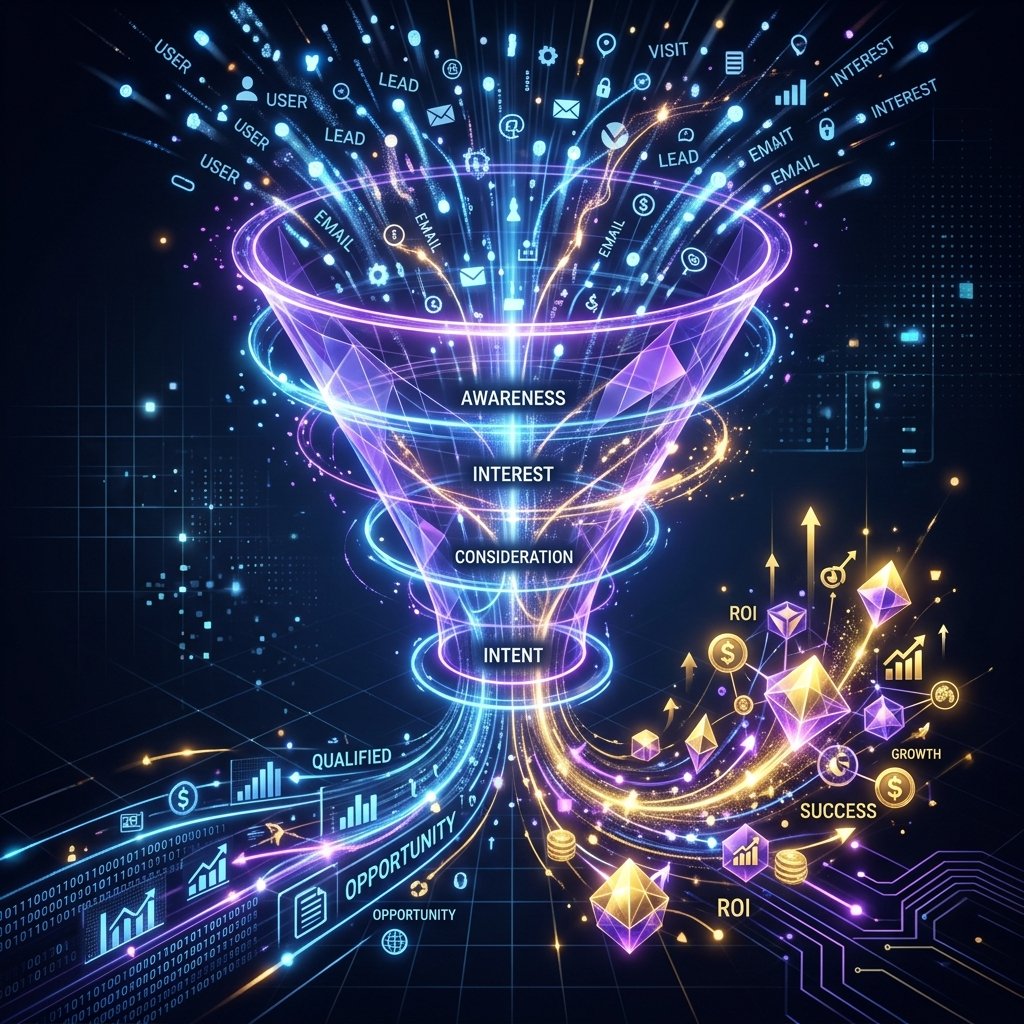


A "smart" funnel isn't about having more steps — it's about removing every step where you currently lose buyers. The funnels that win in 2026 capture intent fast, qualify intelligently, and nurture automatically. Here's the exact stack and workflows we deploy for clients.
- The average B2B buyer interacts with your brand 7–11 times before buying — automating nurture is non-negotiable.
- AI-powered lead scoring identifies high-fit prospects 3× more accurately than rules-based systems.
- Conversion lifts of 30–60% are realistic within 90 days for businesses moving from static funnels to smart automated ones.
What's in this guide
- Why most lead funnels fail
- Anatomy of a smart funnel
- The tools that power it
- Playbooks by business type
- How to measure what's working
Why Most Lead Funnels Fail
The classic "funnel" — capture email, send 5-email drip, hope for sale — was effective in 2015. In 2026 it's a leaky bucket. Buyers expect personalized, context-aware engagement, and they ghost generic sequences.
Here's where most funnels lose people:
- Capture: static forms ask for too much, too soon
- Qualification: rules-based scoring misses subtle buying signals
- Nurture: generic email sequences that don't adapt to behavior
- Handoff: reps get leads cold, with no context on what triggered the interest
- Follow-up: manual, inconsistent, often skipped after the first "no reply"
Each of these is a fixable problem with the right automation.
Anatomy of a Smart Funnel
A modern automated funnel looks more like an interconnected system than a linear sequence. Here are the five pillars:
1. Conversational capture
Replace static forms with AI chatbots that ask context-relevant questions. Instead of "Name, email, company size, role, budget" all at once, the bot asks 1–2 questions, gets a response, then asks more — like a real conversation. Capture rates increase by 2–3×.
2. AI-powered scoring
Forget points-based scoring ("VP = 10 points, 100+ employees = 15 points"). AI can read a lead's company website, LinkedIn, and chat transcript to score fit and intent with far more nuance. The result: reps spend their time on the right people.
3. Branching nurture sequences
If a lead opens email #1 and clicks the link to the case study, they get a different email #2 than someone who didn't open. Multiply this across 10+ touchpoints and you get personalization without writing 100 different versions manually.
4. Real-time handoff to humans
When a lead shows clear buying intent — visiting the pricing page 3 times, opening 5 emails, replying with a question — the system pings the right rep immediately, with the full context. Speed-to-lead is one of the biggest predictors of close rate.
5. Continuous learning
Every closed/lost deal feeds back into the scoring model. Every email that converts gets reused. Every drop-off in the funnel becomes a test target.
The Tools That Power It
You don't need a Fortune 500 budget to build this. Here's a stack that works for businesses of any size:
- CRM: HubSpot (free tier covers small teams) or Pipedrive
- Conversational capture: Custom AI chatbot or Drift / Intercom
- Lead enrichment: Clearbit, Apollo, or built-in via HubSpot
- Automation layer: Zapier, Make, or n8n — see our automation tools comparison
- Email: Customer.io, Mailchimp, or HubSpot Marketing
- Scoring: Custom LLM-based scoring via OpenAI or Claude API
The whole stack runs under $300–500/month for most small businesses. Read our guide on how to automate without coding for setup tutorials.
Playbooks by Business Type
SaaS
Focus on trial-to-paid conversion. The funnel: chatbot qualifies trial users on signup, sends in-app messages based on feature usage, hands off to CSM if they hit a "stuck" pattern, automated upgrade nudges 3 days before trial expires.
E-commerce
Focus on cart recovery and post-purchase. The funnel: SMS/email abandoned cart sequence with personalized product recs, post-purchase follow-up for reviews and cross-sells, win-back campaign for dormant customers based on past purchase data.
B2B services / agencies
Focus on lead quality over quantity. The funnel: chatbot qualifies fit on first visit, books discovery call with calendar embed, AI-personalized follow-up if no-show, long-term nurture for not-yet-ready leads (6+ months).
Local services
Focus on speed-to-lead. The funnel: WhatsApp/SMS-first capture (much higher response rates than email locally), instant booking link, automated review request after service delivered.
How to Measure What's Working
Don't track everything. Track these four:
- Lead-to-MQL rate: Are you capturing the right people?
- MQL-to-SQL rate: Is your qualification working?
- SQL-to-customer rate: Is sales executing well on the leads you send?
- Time-to-customer: How fast does it happen?
Look at these monthly. The funnel improves where you improve each rate, in order.
"The smartest funnels aren't the most complex. They're the ones that remove friction at every step and let buyers move at their own speed."
Ready to Build a Smart Funnel That Sells While You Sleep?
Techydo designs and builds custom automated funnels for SaaS, e-commerce, and B2B services. Whether you need to fix one broken stage or rebuild from scratch, we can help. See our automation services.
Related reading: How AI chatbots boost business growth · Best practices for high-converting websites